
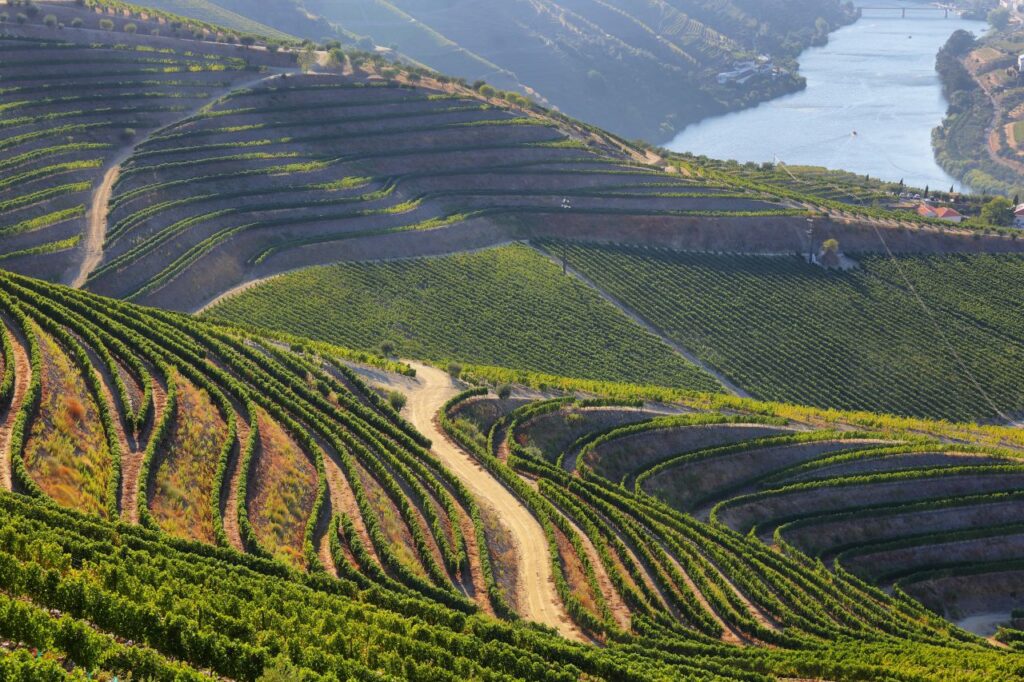
The Douro is the river cruise I recommend most often to clients who have already done the Rhine or the Danube. The scenery is more dramatic, the crowds are thinner, and the wine is better. Most scenic river cruises in europe start conversations about the Rhine, but the ones that end with clients saying they want to go back almost always involve Portugal.
Northern Portugal delivers a combination that is hard to match anywhere else on the continent. The Douro Valley climbs steeply from Porto through terraced vineyards that have been producing port wine for centuries. The hillside villages come into view one after another as the ship moves east. The pace is slower than ocean cruising. That is entirely the point.
Why the Douro Stands Apart From Other River Cruises in Europe
Most river cruises in europe follow flat waterways through historic city centers. The Douro does something different. The river cuts through a gorge that rises on both sides, and the vineyards climb the terraces above the ship at angles that require dry-stone walls to hold them in place. The scenery changes every few hours.
The Douro Valley holds UNESCO World Heritage Site status. That designation recognizes the unbroken landscape of hand-built terraces, quintas, and working vineyards that stretch for miles along both banks. No other river cruise in Europe moves through a landscape with that level of cultural and agricultural continuity.
Affordable european river cruises on the Douro exist at a lower price point than most travelers expect. The Douro has fewer operators than the Rhine or Danube, which keeps competition real and pricing honest. A seven-night sailing that includes most meals, guided excursions, and port wine tastings at riverside quintas routinely comes in well below what the same itinerary would cost on a comparable luxury river cruise in Central Europe.
Porto as the Starting Point
Every Douro sailing starts or ends in Porto. That is not a consolation prize. Porto is one of the best cities in Europe for a pre- or post-cruise extension, and clients who give it two nights instead of one consistently say they wish they had added a third.
The historic Ribeira district runs along the waterfront and earns its UNESCO World Heritage Site recognition without trying. The azulejo tile facades, the narrow lanes climbing away from the river, and the concentration of wine lodges across the Dom Luís Bridge in Vila Nova de Gaia add up to a city that rewards walking in all directions.
The food in Porto is straightforward and excellent. Francesinha is the local dish — a layered meat sandwich in a thick tomato and beer sauce that does not appear on menus anywhere else. The bacalhau preparations across the city run to dozens of varieties. A dinner at one of the tascas in the Bonfim neighborhood costs a fraction of what the same quality would cost in Lisbon.
The port wine lodges in Vila Nova de Gaia offer open air tasting sessions most afternoons. Most lodges include a short cellar tour and two to three tastings at a price that barely covers a glass elsewhere in Western Europe. This is the best introduction to port wine available, and it takes less than two hours.
The Douro Valley: What the River Shows You
The first lock the ship passes through on a Douro sailing resets expectations about scale. The Douro has five locks, and each one lifts the vessel a significant number of meters before the next stretch of river opens up. The lock operations take time. Most cruise lines treat them as part of the experience rather than a delay — the deck fills with passengers and the views from the lock walls are some of the best on the whole voyage.
Pinhão sits at the heart of the port wine production region and is the most photographed stop on any Douro itinerary. The train station there is lined with azulejo panels depicting the history of the valley. The surrounding quintas produce some of the most recognized names in port wine. Most cruise lines schedule at least a half-day excursion here with a tasting and a quinta visit included.
The village of Lamego is a short drive uphill from the river and holds the Nossa Senhora dos Remédios sanctuary — a baroque staircase of over 600 steps climbing to a hilltop chapel. The view from the top covers the valley in both directions. It is worth the climb.
Régua sits at the center of the port wine region and functions as the operational hub for most Douro cruise lines. The wine museum there runs an excellent permanent exhibition on the history of port production. The waterfront promenade is lined with quintas offering tastings, and the excellent food and wines at the waterfront restaurants represent some of the best value eating on the entire cruise.
Choosing a Douro River Cruise Line
The major river cruise lines operating on the Douro include AmaWaterways, Scenic, Tauck, and Emerald Cruises. Each brings a slightly different product to the same geography.
Emerald Cruises runs a strong Douro program with a smaller ship than most competitors. The smaller vessel accesses stretches of the upper Douro that larger ships cannot reach, which adds excursion variety in the eastern sections of the itinerary. Emerald’s price positioning sits in the affordable luxury segment — strong value for the product quality.
A luxury river cruise on the Douro from Scenic or Tauck delivers butler service, all-inclusive pricing, and a higher cabin standard than the entry-level lines. The all-inclusive model on a luxury river cruise removes most of the onboard cost variables, which makes budget planning easier.
River cruise offers on the Douro tend to appear earlier in the booking calendar than comparable deals on the Rhine or Danube. The operators with smaller fleets discount less aggressively once capacity fills. Booking eight to twelve months ahead gives you the best cabin selection and the most consistent pricing.
What to Know Before You Book
The Douro sailing season runs April through October. May and June offer the best combination of vineyard color, manageable temperatures, and reliable weather. The harvest months of September and October add the grape-picking activity to the excursion calendar and consistently produce the most visually dramatic scenery on the terraces.
River cruising ships on the Douro are smaller than those on the Rhine or Danube. Most vessels carry between 70 and 130 passengers. That size makes a real difference to the experience — excursion groups are smaller, the ship feels personal, and the crew knows your name by day two.
The Douro does not have a europe river cruise reputation as established as the Rhine or Danube, and that gap works in your favor. The port towns, the quinta visits, and the hilltop villages attract far fewer day-trippers than the Rhine gorge castles or the Wachau Valley. The most scenic river cruises in europe that consistently deliver uncrowded experiences almost always include the Douro near the top of the list.
Extending Into Spain
Several cruise lines offer itineraries that continue east from the upper Douro into Spain, ending near Salamanca. The Spanish leg adds a different landscape and a different food tradition. Salamanca’s old city is a UNESCO World Heritage Site and worth the extension for the sandstone architecture and the university district alone.
A Porto and Salamanca combination is one of the most complete cultural itineraries available on affordable european river cruises. The two endpoints anchor very different halves of the Iberian Peninsula, and the Douro river cruise connects them in a way that flying between the two never would.
Conclusion
The Douro delivers something that most river cruises in europe cannot match: a landscape that was shaped entirely by human effort over centuries, now protected as a UNESCO World Heritage Site, and still producing some of the world’s most recognized wines. The views are real. The crowds are manageable. The river cruise offers value that the Rhine and Danube cannot touch at the same price.
Clients who ask me about the most scenic river cruises in europe want something that looks as dramatic in person as the photographs suggest. The Douro is the answer I give them. It earns the recommendation every time.