
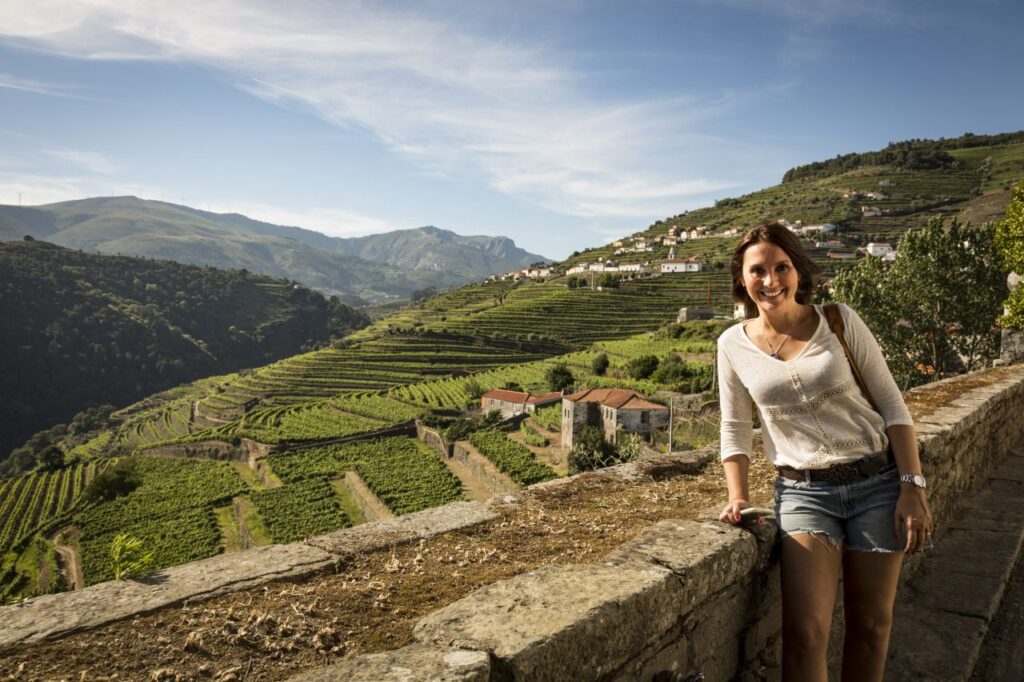
I’ve been asked many times which single stop on a river cruise in Europe made the biggest impression, and I keep coming back to the same answer: Pinhão, Portugal. It’s a small town on the Douro River, a few hours by boat above Peso da Régua, and it sits in the narrowing valley where the river and the vineyards and the quiet and the light all converge in a way that is genuinely difficult to describe accurately. You have to be there, which is exactly the kind of thing river cruises in europe are designed to give you access to.
Most people who travel to Portugal focus on Lisbon and Porto. Those are both excellent cities and worth serious time. But the Douro Valley above the coast is a different Portugal, older and slower and more rooted in the land, and Pinhão is its most concentrated expression. The town itself is small enough to walk across in ten minutes, but the surrounding quintas, the terraced hillsides, and the river itself give you days of material if you’re paying attention.
What Makes Pinhão Different From Every Other Port
On the most scenic river cruises in europe, the Douro route consistently draws comparisons to the Rhine and the Danube in terms of landscape quality. What sets Pinhão apart from any stop on those more trafficked rivers is scale. Pinhão has not been built up for tourism. There are no souvenir shops, no crowds at the dock, no coach buses idling outside a famous monument. What’s there is the train station, a handful of restaurants, some wine lodges, and the particular quiet of a place that agriculture has kept honest for two thousand years.
The train station at Pinhão is the most famous building in town, and rightfully so. The interior walls are lined with blue and white azulejo tile panels painted in 1937, depicting the harvest traditions and river life of the Douro Valley in a visual style that manages to be both documentary and genuinely beautiful. Travelers who step off the ship and walk five minutes to the station often spend an hour inside, which sounds like a long time for a small train station until you’re actually standing in front of those tiles.
Wine Tastings at the Source
Pinhão sits at the center of the most prized port wine production territory in the entire Douro. The quintas visible from the river around Pinhão include some of the most prestigious addresses in Portuguese wine, and the cruise lines that operate on the Douro have negotiated access to estate visits and tastings that simply don’t exist for independent travelers. When you taste port wine in Pinhão, you’re tasting it in the valley where the grapes were grown, sometimes at the estate where the wine was made, and that context changes the experience completely.
AMA Waterways tends to structure its Pinhão days around immersive quinta visits, with guides who can explain the differences between the major port styles, the harvest process, and the aging techniques that distinguish each producer. Avalon Waterways offers similar access, often pairing the wine experience with a walk through the vineyard terraces themselves, which gives passengers a physical understanding of why this landscape carries UNESCO World Heritage designation. Either way, the wine you taste at Pinhão is not the wine you’d find at a duty-free shop or a city restaurant. It’s the article, at the source.
The Valley From the Water
The approach to Pinhão by river is one of the things that makes a douro river cruise genuinely different from any other river cruise in europe. As the ship moves upstream from Régua, the valley narrows and the terraces rise steeply on both sides, the schist rock visible through the vines, the quintas perched at different elevations with their painted names and insignias visible from the water. It’s the kind of landscape that makes people stop mid-conversation and go quiet for a while, which is a reliable indicator that something is working.
The light in the Douro valley changes dramatically through the day. Early morning brings mist over the river, the vineyards emerging from it gradually as the sun climbs. Late afternoon turns everything amber and gold, and the terraces take on a depth of color that no photograph quite captures. Being on deck at those moments is one of the privileges of river cruising that doesn’t translate into a bullet point on an itinerary but stays with you for years after the trip.
Eating and Drinking Well in Pinhão
The restaurants in and around Pinhão are simple by design. The cuisine of the Douro is built on the products of the valley itself: bacalhau prepared a dozen different ways, roasted kid goat, locally pressed olive oil, regional cheeses, and bread that comes out of the oven with a crust that has no equivalent in any city bakery. The wine that accompanies all of it is sold at the kind of prices that reflect where you are rather than what the market will bear in Lisbon or Porto.
Most cruise itineraries allow at least one dinner ashore in the Douro valley, and if that dinner happens near Pinhão, the combination of the meal, the setting, and the wine makes it one of the evenings that travelers consistently cite when asked what they remember most about their affordable european river cruises. The Douro has a way of delivering that kind of memory reliably, which is why the river keeps filling ships season after season.
How Pinhão Fits Into a Douro Itinerary
A Douro river cruise typically runs between seven and ten days, moving upstream from Porto through Régua, Pinhão, and often continuing into Spain toward Salamanca before turning back. Pinhão usually falls in the middle of the upstream journey, which positions it as the climax of the vineyard section before the landscape shifts in character east of the valley. Lines that spend a full day in port at Pinhão give passengers enough time to visit a quinta, walk the town, see the station, and still have hours left to sit by the river and do nothing productive.
If you’re deciding between a Douro cruise and one of the more established European routes, the honest answer is that the Douro offers something the Rhine and the Danube cannot: genuine remoteness in the middle of a luxury experience. The Douro Valley rewards travelers who want their river cruise to feel like a discovery rather than a confirmation of what they already knew about Europe. Pinhão is the clearest proof of that. For everything else the Douro delivers stop by stop, read our full piece on Peso da Régua and the Heart of the Douro Valley.