
Getting Your Bearings on Aruba
Latitude 21 started as a Caribbean-focused agency, and Aruba is one of the destinations we book more than almost any other. Clients come back year after year, which tells us something about the island. Aruba is small, safe, dry, sun-soaked, and easier to navigate than most of its Caribbean neighbors. That said, first-time visitors often show up with the same question: what do we actually do beyond lying on the beach? The answer is a lot more than most people expect.
The island is only about 20 miles long by 6 miles wide. The developed hotel strip runs along the northwestern coast, from Palm Beach south to Eagle Beach and down toward Oranjestad. The wilder half of the island, the northeast, is where Arikok National Park, the Natural Bridge, and the rougher coastline live. The southeast has quieter beaches like Baby Beach. Understanding this rough geography helps you plan the trip, because a lot of the best things to do in Aruba are on the opposite side of the island from where you sleep.
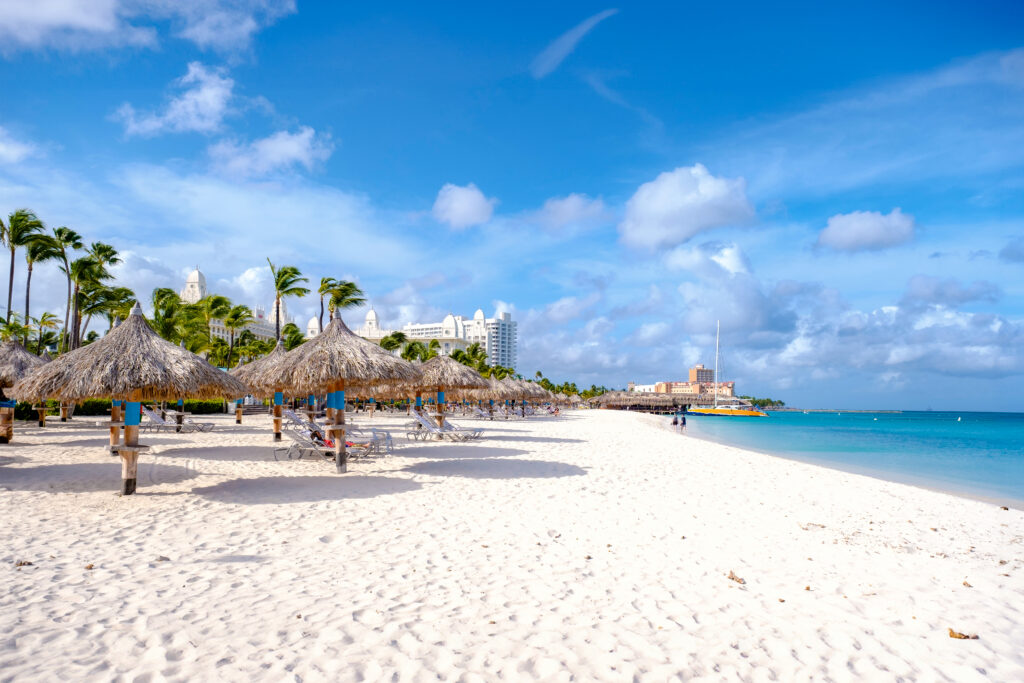
The Beaches in Aruba: Palm Beach, Eagle Beach, and Beyond
The beaches in Aruba are the headline reason people come, and they earn it. Palm Beach is the busy, hotel-lined strip with calm turquoise water, watersports operators, restaurants, and beach clubs packed together. This is the beach for people who want energy, easy amenities, and a walk of no more than a few steps back to their room. If you are staying at one of the high-rise resorts, Palm Beach is essentially your front yard.
Eagle Beach is quieter, wider, and consistently ranked among the best beaches in the world. The famous fofoti trees, the leaning divi-divis, sit right on the sand and make some of the most photographed backdrops on the island. Eagle Beach is where we send couples and families who want the classic postcard beach day. It also tends to be less crowded than Palm Beach, which matters if you value quiet mornings and lower-key sunsets.
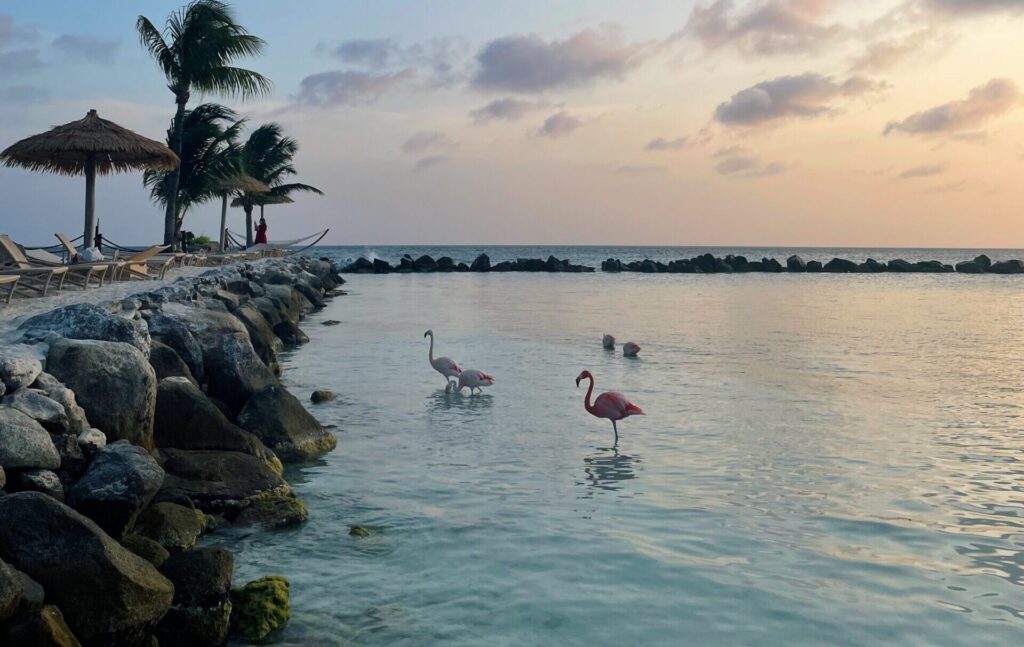
Arikok National Park and the Natural Pool
If you only do one full day away from the beach, make it Arikok National Park. The park covers roughly 20 percent of the island, protecting the rugged windward side with its cacti, iguanas, cave paintings, and coastline that looks nothing like the calm western beaches. You can drive in yourself if you have a 4×4, but most visitors book a guided tour, which we generally recommend both for the storytelling and because the roads inside the park are rough.
The main attraction inside Arikok is the Natural Pool, a rocky basin known locally as Conchi. It sits on the northern coast, protected from the open sea by a wall of volcanic rock, and it is one of the more unique swimming experiences in the Caribbean. Wear water shoes, bring a mask if you like to look around, and expect a bumpy ride to get there. The natural pool is the postcard, but the drive through the park is honestly just as memorable, with landscape and terrain that reminds you Aruba is more than beaches.
The Iconic Landmarks: California Lighthouse, Natural Bridge, and Gold Mill Ruins
Aruba has a handful of landmarks that every first-time visitor should build into their trip. The California Lighthouse sits at the northwestern tip of the island and offers one of the best sunset views you will get outside a boat. Time your drive so you arrive an hour before sunset, walk around the base, and stay for the show. There is a restaurant next door if you want to make a night of it.
On the north coast, the Natural Bridge is the second must-see landmark. The original massive arch collapsed in 2005, but a smaller Natural Bridge nearby is still standing, and the surrounding coastline is dramatic in a way the western beaches are not. Nearby you can also visit the Gold Mill Ruins at Bushiribana, a 19th-century stone structure from the island’s short-lived gold rush. These three landmarks are easy to combine into one loop drive, which is one of the more satisfying half-day itineraries on the island.
Boca Catalina, Baby Beach, and the Beach Bar Crawl
For snorkelers, Boca Catalina is where you want to go. It is a small, sheltered cove on the northwestern tip near Malmok, with clear water, easy entry, and fish you can see from the surface. Bring your own gear or rent from one of the operators on Palm Beach and drive up. It is a quieter beach experience with better underwater visibility than most of the developed strip.
On the far southern end of the island, Baby Beach lives up to the name. The water is shallow, calm, and warm enough that even the youngest kids can wade in without worry. It is a longer drive from the hotel zone, roughly 45 minutes, but combining Baby Beach with a stop at a local beach bar like Zeerovers for fresh fish makes for one of the best full day trips on the island. Aruba has a real beach bar culture that flies under the radar, and clients who spend an afternoon hopping between a few of them almost always list it as a trip highlight.
Happy Island and the Love Aruba Sign
Two smaller stops are worth building in. Happy Island is a private floating platform anchored off the coast that you reach by tender from Palm Beach. It is a mellow, adults only lounge over the water with cocktails, a swim ladder, and Caribbean views that photograph beautifully. Book a day pass or a package ahead of time, especially in high season, because capacity is limited.
The Love Aruba sign is the more casual photo stop. It sits along the highway in the middle of the island and has become the classic “we are in Aruba” backdrop for arriving visitors. Pull off, grab the photo, and move on. It takes 10 minutes but it is one of the things guests almost universally do on day one.
Aruba Ocean Villas and Adults Only Escapes
For couples looking for something quieter than the Palm Beach high-rises, the Aruba Ocean Villas property on the southeast coast in Savaneta offers overwater and beachfront bungalows in a small, secluded setting. It is one of the only overwater villa experiences in the Caribbean, and it works especially well as an adults only honeymoon or anniversary base. The trade-off is that it is farther from the main hotel action, so plan to rent a car if you want to explore during the day.
Beyond Aruba Ocean Villas, there are several other adults only resorts along Palm Beach and Eagle Beach for couples who prefer a resort setting without kids. Bucuti and Tara on Eagle Beach is the classic choice, consistently ranked one of the best adult-only properties in the Caribbean. Day passes are also available at several resorts if you are staying in a different neighborhood and want to sample the pool and amenities of an adults only property for an afternoon.
Aruba Tourist Activities: Tours, Day Passes, and Full Day Trips
The most popular Aruba tourist activities beyond the beach are the water tours. A sunset catamaran cruise with dinner and drinks is the classic booking, and it is genuinely worth doing at least once. Snorkeling tours to the SS Antilla shipwreck off the northern coast, one of the largest wrecks in the Caribbean, are anot`her consistent client favorite. The best tours Aruba offers tend to book out in high season, so we usually reserve for clients before arrival rather than waiting until you land.
UTV and ATV tours through Arikok are another popular half-day or full day option if you want to see the wild side of the island without doing the driving yourself. Horseback rides along the beach at sunset are especially good on the quieter northern coast. Deep-sea fishing charters run out of the harbor at Oranjestad. Day passes at higher-end resorts are useful if you are staying at a smaller property or in a rental and want to spend a day at a full-service pool for a set price. Between the beach, the park, and the water tours, filling five or seven days with meaningful activities in Aruba is easier than in most Caribbean destinations of this size.
Getting Around: Rent a Car or Ride the Bus
Aruba is compact enough that you can experience a lot without a car, but if you want to reach the Natural Bridge, Baby Beach, or Arikok on your own schedule, we recommend you rent a car for at least two of your days. Rentals are inexpensive, driving is straightforward on English road signs, and gas is affordable. Automatic transmission is the norm and 4×4 vehicles are available if you want to drive into the park itself.
If you would rather not drive, the local Arubus system runs along the main coast from Oranjestad to the hotel strip, and taxis are plentiful in the resort areas. For anything outside the developed zone, a guided tour is often the easiest way to see the sights without the logistical work. Our advisors typically build a mix into a client’s itinerary: two or three beach days at the resort, one or two days on organized tours, and one or two days with a rental car to explore independently.
For a broader overview of the island straight from the source, the official Aruba Tourism Authority Things to Do page catalogs beaches, tours, dining, and events. When you are ready to actually book the trip, our all-inclusive resorts team can pair you with the right property along Palm Beach or Eagle Beach and pre-book the tours worth locking down before you land.
Conclusion
The best things to do in Aruba split into three easy buckets: the beaches, the parks and landmarks, and the water tours. Do a mix of all three and you have a trip that feels far bigger than the 20 miles of island you are actually on. Rent a car for at least two days, book the sunset catamaran cruise before you land, drive to the California Lighthouse for at least one evening, and give yourself a full day inside Arikok National Park to see the Natural Pool and the Natural Bridge. Add in a slow beach bar afternoon on the southern side of the island and a photo at the Love Aruba sign on day one, and you have the classic first-timer template. Aruba is not the flashiest Caribbean destination, but for a well-designed week of easy sun, active mornings, and long-dinner evenings, it might be the most consistently satisfying island we book.