
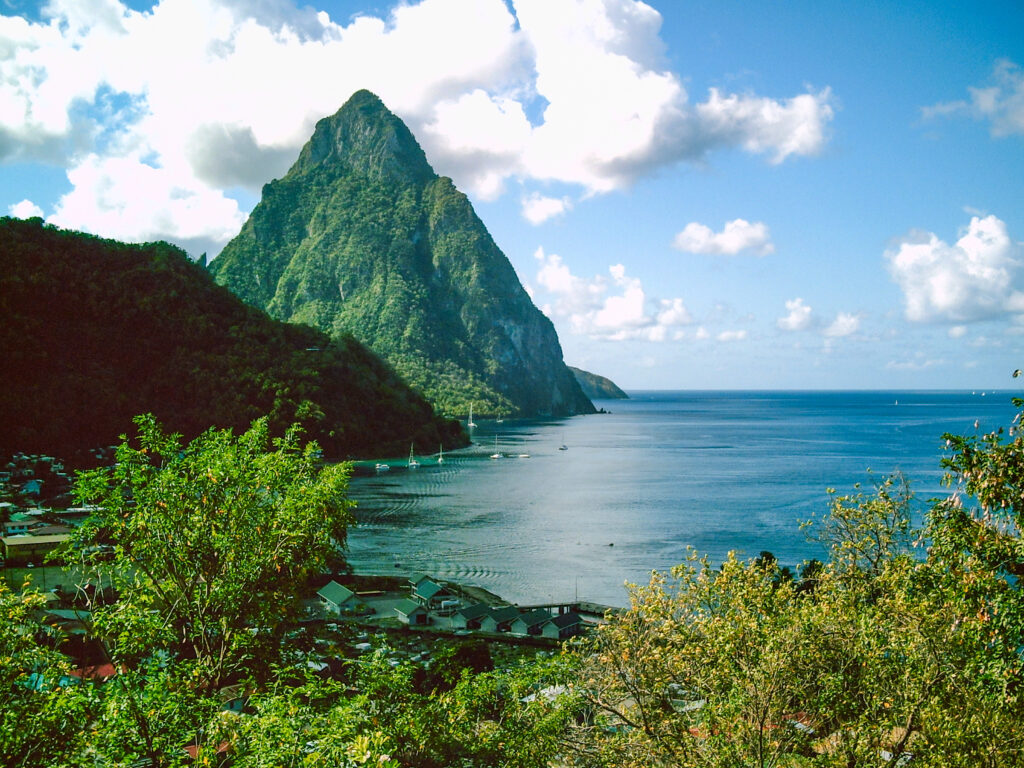
The Pitons Define the Island
The Pitons St Lucia, the Tet Paul Nature Trail, and the Toraille Waterfall St Lucia give the island some of the most distinctive natural scenery in the Caribbean. These three landmarks anchor almost every serious trip to the southwest coast, and they hold up to the expectations travelers arrive with.
The Pitons are the silhouette every photograph of Saint Lucia tries to capture, and they earn the attention. The two volcanic plugs rise straight out of the sea on the southwest coast, which is dramatic enough that UNESCO inscribed the Pitons Management Area on its World Heritage list. Gros Piton is the taller of the pair and the one most travelers hike. Petit Piton is steeper, more exposed, and reserved for technical climbers.
I find the Pitons most striking from the water. Cruise traffic slows on approach so passengers can get the postcard view, and Sugar Beach sits in the saddle between the peaks for guests who want to look up at them rather than down. Either vantage point sells the rest of the island before you have even started exploring.
Hiking Gros Piton: What the Climb Actually Demands
The Gros Piton hike is not a polite stroll. It is a roughly four-hour round trip on uneven volcanic rock with sustained steep sections and humid Caribbean air. Travelers who hike regularly handle it. Travelers who do not should not pretend otherwise. Wear real trail shoes, bring more water than feels reasonable, and start early enough to be off the mountain before midday heat sets in.
A licensed guide is required, and the guides from Fond Gens Libre know the trail well. Entrance fees run approximately $35 USD per person and support both the conservation effort and the local community that maintains the path. Budget around 45 minutes for the approach to the first major viewpoint, with the full summit push adding another ninety minutes from there. At the top of Gros Piton, the view reaches back across Sugar Beach and out to Martinique and St Vincent on clear days. The descent is harder on the knees than the climb, which is the line I forget to give people before they go.
Tet Paul Nature Trail Is the Better Option for Most Travelers
The Tet Paul Nature Trail is where I send anyone who wants the Pitons view without the Pitons workout. The trail is short, the grade is manageable, and the lookouts are excellent. Families do well here. So do travelers who are still acclimating, or who have already used their hiking day somewhere else and want a softer afternoon.
Local guides on the Tet Paul Nature Trail walk you through the farming history of the area and the stories tied to Fond Gens Libre, the community that ran the property as a working homestead. The view of both Pitons framed by farmland and ocean is the photo most travelers want. The trail is also one of the better introductions to the way the southwest coast actually feels. Plan for ninety minutes total including the guided commentary, and bring good walking shoes even if the grade is gentle.
Toraille Waterfall and Volcanic Landscapes
The Toraille Waterfall in St. Lucia is the right palate cleanser after a hike. The falls drop into a cool pool that is shallow enough to wade and deep enough to stand under. It is the kind of stop that resets the day in twenty minutes. Operators around Soufriere bundle Toraille Waterfall with ATV runs and short driving tours for travelers who want a variety pack.
Just up the road, Sulphur Springs St Lucia delivers the island’s volcanic energy at close range. The drive-in volcano section lets visitors get within reach of bubbling mud and sulphur vents that you usually only see in glossy nature documentaries. The hot springs nearby are mineral-warm and soothing after a hard hiking day. Some travelers compare Sulphur Springs to the Soufriere on Guadeloupe, but the drive-in access here is unusual in the Caribbean. Children find it genuinely fascinating, which makes it a reliable addition to any family itinerary in the southwest.
Soufriere and the Southwest Coast
Soufriere is the town that ties the southwest natural circuit together. The waterfalls, the Pitons, the volcanic vents, and the small-boat marinas all sit within a tight radius. Most days I would rather base out of Soufriere than chase scenery from Castries, because the time saved on transit shows up in how much you can actually do.
The reefs off this coastline are also a quiet argument for why inclusive resorts in this corridor consistently earn strong diving reviews. The volcanic geology that built the Pitons keeps going underwater, and the formations divers move through look almost nothing like a flat coral shelf elsewhere in the region. Vieux Fort sits at the southern end of the island, about 45 minutes from Soufriere, and offers a flatter, windier, less touristic side of Saint Lucia worth a half-day if the southwest circuit leaves time.
Castries and Daily Life Beyond the Resorts
Castries is the working capital, and a morning at Castries Market is worth the drive even if you never plan to buy anything. The stalls run from produce and spices to crafts and pepper sauces, and it is the most direct window into daily Saint Lucian life that most travelers will get. The cruise port is right next door, which is why most ship excursions start there before heading south.
If you are basing in Soufriere, treat Castries as a half-day. If you are basing at the airports’ end of the island, plan a morning at the market and then drive down the coast to the Pitons in the same trip. Either route works.
Luxury Stays with a View
Saint Lucia rewards travelers who pair the adventure with a serious resort, and the most photographed property on the island is Jade Mountain. The architecture is unusual, the sanctuaries are open on one side, and the view of the Pitons is the reason it costs what it costs. Couples looking for Jade Mountain Resort as part of an all-inclusive itinerary book it for the romance angle. Travelers researching nightly rates here should know the published pricing reflects the curated experience, not a comparable room-only resort.
Properties that pair thermal spa amenities with all-inclusive billing also do well in the Soufriere corridor. The pairing of volcanic features and resort wellness is one of Saint Lucia’s quieter strengths.
Climbing the Pitons for Specialists Only
For trained climbers, the Pitons offer real technical routes on Petit Piton, with permits, professional guides, and a level of route-finding that is several orders of magnitude beyond the Gros Piton hike. This is not casual terrain. It is also not the trip most readers are planning. I include it because the climbing community shows up regularly in Saint Lucia, and travelers should know there is more to the Pitons than the hiking trail.
Even if you never tie into a rope, the Pitons end up shaping nearly every itinerary on this coast. They appear in dinner views, sunset photos, dive briefings, and the framing of every villa terrace. That kind of geographic gravity is rare.
Planning a Trip That Actually Lands
Saint Lucia rewards trip design. Pace the active days. Pair Tet Paul Nature Trail with a waterfall stop. Save Gros Piton for a morning when the weather is cooperating. Keep at least one day for the beach and one for the resort, and let the rest float.
I lean on the team at Latitude 21 to balance these decisions for travelers who want the iconic sights without burning their week on logistics. Sequencing matters more than people expect, and a planner who knows the island will get you to the right hikes, the right meals, and the right resort for the trip you are actually trying to take.
Conclusion
Saint Lucia is one of the rare Caribbean islands where the landscape is the headline. The Pitons set the visual frame, the Tet Paul Nature Trail and Toraille Waterfall give travelers a softer way to engage with it, and the Sulphur Springs and reefs add the volcanic and underwater layers that round the trip out. The mistake travelers make is treating Saint Lucia like a beach week with hikes attached. It works better the other way around: scenery week, with beach time worked in. Plan it that way and the island delivers what the photos promise.
Travelers who come to Saint Lucia for its scenery-first character often find their appetite for landscape-driven travel extends naturally to European destinations. River cruises in Europe are built around the same scenic premise, and the most scenic river cruises in Europe consistently rank alongside Caribbean island itineraries for landscape-driven impact. Avalon Waterways reviews reflect the priorities of travelers who chose the line specifically because the passing scenery was the primary draw.