
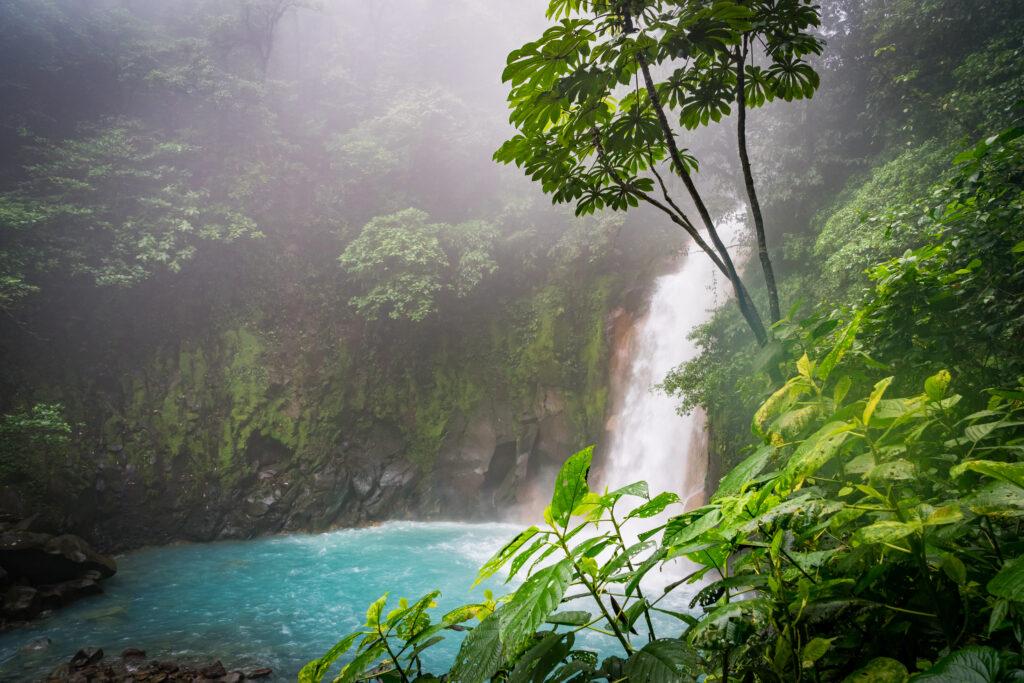
Costa Rica is the destination I most often recommend to travelers who say they want something with texture but are nervous about going too far off the beaten path. It is genuinely accessible, genuinely beautiful, and genuinely rewarding for people who know how to use it. The problem I see most often is that travelers approach it like a resort destination when it actually works best as a structured itinerary with real logistics. The country rewards people who show up with a plan more than it rewards people who show up and figure it out on arrival. The wildlife does not wait for slow planners, the best beach towns are not easy to reach without coordination, and the road conditions between regions require more time than maps suggest.
What Costa Rica does exceptionally well is variety within a compact footprint. You can move from a rainforest canopy to a Pacific beach to a cloud forest to a volcano within a week and never feel rushed if the routing is right. That kind of range is rare. Most destinations require much larger distances to achieve the same diversity of experience. That compression of ecosystems is what makes Costa Rica useful for travelers who want to see a lot in a limited window without flying between countries.
When Is the Best Time to Go to Costa Rica
When is the best time to go to Costa Rica is the question I answer more than any other for clients considering this trip, and the answer depends entirely on which part of the country you are targeting. The dry season runs from December through April on the Pacific coast and in the Central Valley. That window produces the most reliable beach weather, the easiest road conditions, and the clearest skies for volcano views around Arenal and Monteverde. If your priority is a beach vacation with predictable sun, the dry season is your answer without much qualification.
The rainy season runs from May through November, with September and October being the wettest months in most regions. What most travelers do not realize is that rainy season in Costa Rica does not mean all-day rain. It typically means afternoon showers that clear by evening, green landscapes that feel genuinely lush, fewer crowds at the national parks, and lower prices at most lodges. Many Costa Ricans refer to the rainy season as the green season, and the green season is a genuinely valid time of year to visit for the right traveler. Wildlife activity is high during this period, and travelers who are flexible about beach weather often prefer it for exactly those reasons. The Caribbean coast runs on its own calendar entirely, with drier conditions in September and October when the Pacific side is wettest.
The Dry Season and the Pacific Coast
The dry season is when the pacific coast of Costa Rica operates at full capacity. Guanacaste in the northwest, the Nicoya Peninsula, and the stretch down to Manuel Antonio all deliver consistent sun and low humidity from December through April. The water is warm, the roads are passable in a standard vehicle, and the surf conditions at the popular breaks are at their most consistent. Costa Ricans who live and work in beach towns on the Pacific coast will tell you that December through March is peak season, which means higher prices, more competition for lodging, and more crowds at places like Manuel Antonio National Park.
Travelers who want the Pacific coast experience without peak season pricing often do very well in May and June, which sit at the edge of the rainy season before the heavy rains arrive. The parks are less crowded, the lodges are still well-staffed, and the afternoon rains have not yet become a daily pattern. November is another strong window for the same reasons. The crowds thin in November but the weather on the Pacific side is still drying out, and most of the infrastructure is operating normally after the wet season.
The Caribbean coast operates on a completely different seasonal pattern and deserves separate consideration depending on your interests. Tortuguero on the Caribbean side is one of the most important sea turtles nesting sites in the Western Hemisphere. Green sea turtles arrive from July through October, and the time of year you visit determines which species you are likely to see. Leatherback turtles come earlier in the season, greens come later. A guided night walk during nesting season is one of the more extraordinary wildlife experiences available in Costa Rica and one that most travelers on standard Pacific coast itineraries never think to consider.
Where to Stay in Costa Rica by Region
Knowing where to stay in Costa Rica depends on understanding that the country divides naturally into distinct travel zones, and spending more than two nights in one zone without a purpose is usually a mistake. The lodging geography I use when building itineraries breaks into four main clusters: the Pacific Northwest covering Guanacaste, Tamarindo, and Nosara; the Central Pacific anchored by Manuel Antonio and Quepos; the Central Valley and volcanoes including La Fortuna, Arenal, and Monteverde; and the Southern Pacific and Caribbean coast.
Guanacaste is the most resort-oriented region and the easiest entry point for travelers who want a beach-forward trip without a lot of movement. The beaches are long and dry during peak season, and the infrastructure for travelers is the most developed in the country. Manuel Antonio gives travelers a combination of wildlife and beach that is hard to find anywhere else in the hemisphere. The park itself sits right next to town, and a morning walk through it before the crowds arrive at ten gives you monkeys, sloths, and coatis on trails that are genuinely short and easy to navigate. For travelers who want something more remote and more focused on wellness, Nosara and the Nicoya Peninsula are in a different register entirely. Playa hermosa and the beaches around Guanacaste give travelers a clean entry point for a first visit costa rica trip before adding complexity with volcano and forest extensions.
Santa Teresa Costa Rica and Who It Is Actually For
Santa teresa costa rica is the answer I give when clients describe a very specific kind of traveler: someone who wants a surf town with good food and yoga but does not want to feel like they stumbled into a party resort. Santa Teresa sits at the southern tip of the Nicoya Peninsula and takes some effort to reach, which is actually the point. The road quality going in filters out casual travelers and produces a town that feels intentional and calm even during high season. The beach is long, the waves are consistent, and the food scene has developed into something you would not expect from a town this remote.
Getting to Santa Teresa from San Jose takes the better part of a day either by ferry and road or by small domestic flight to Tambor followed by a short transfer. The effort is worth it for the right traveler and not worth it for someone who wants to maximize beach time without the transit. I tell clients that Santa Teresa works best as a destination you build a trip around rather than a stop you add to a longer itinerary. Two or three nights there with the right lodge and a morning surf lesson is a trip in itself.
La Fortuna and the Volcano Circuit
La Fortuna and the Arenal Volcano area represent the version of Costa Rica that most travelers picture when they think about eco-lodges and rainforest adventure. Arenal is not always visible, and the volcano sits under cloud cover much of the time, but the landscape around it, the hot springs, the hanging bridges through the cloud forest, and the wildlife density in the surrounding national parks make the region worth visiting even when the cone is hidden. Travelers who time their arrival for early morning on a clear day get the full effect of the volcano against a blue sky, which is genuinely impressive.
The hot springs around La Fortuna are a legitimate draw and not just a tourist add-on. After a day of hiking, a few hours in thermal water fed directly from volcanic activity is one of those experiences that lands differently in person than it sounds in a brochure. I pair La Fortuna with a Monteverde cloud forest night on most itineraries because the two ecosystems are completely different and the transfer between them, while slow, crosses some of the most beautiful terrain in Central America. The hanging bridges at Monteverde are among the most memorable half-days I build into any Costa Rica itinerary, and they work equally well for solo travelers and families.
Building the Right Trip
Costa Rica works best for travelers who approach it as a loop rather than a point-to-point trip. The classic structure I use is San Jose arrival, La Fortuna and Arenal for two nights, Monteverde for one night, Pacific coast beach destination for three nights, and San Jose departure. That circuit covers volcano, cloud forest, and beach without doubling back on roads, and it gives travelers enough time in each zone to actually absorb the place rather than just drive through it. The total driving time across the loop is manageable if the routing accounts for road conditions and the right time of year to travel each segment.
Where to stay in costa rica within that loop matters enormously because the lodges in this country vary more than almost anywhere I book. The difference between a well-positioned eco-lodge with a naturalist guide and a random guesthouse booked on a travel app is the difference between a transformative trip and an average one. The jungle and wildlife in Costa Rica do not reveal themselves automatically. They reveal themselves to travelers who are in the right location with someone who knows where to look.
Conclusion
Costa Rica rewards travelers who put in the planning. The country is not complicated, but it does respond to preparation in ways that make a real difference in the quality of the experience. Costa Ricans are genuinely welcoming, the infrastructure for travelers is solid, and the range of experiences available in a single week is unmatched in the region. Getting the timing right, choosing the right regions, and having a guide who knows the terrain is what separates a trip that changes how you think about travel from one that was just a nice vacation.
The Costa Rica Tourism Board maintains region-by-region guides, weather calendars, and eco-lodge directories that are particularly useful for first-time planning.
For another tropical timing question worth thinking through, read our guide to the best time of year to cruise the Caribbean and Mexico.