
Why Food Shapes the Saint Lucia Trip
The food in Saint Lucia is the part of the trip that surprises travelers most, and the meals are where the island actually slows you down enough to take it in.
Saint Lucia is one of the few Caribbean islands where the food is genuinely a reason to come back. The kitchen culture leans local, the produce is fresh enough that the standard supermarket version back home feels apologetic, and the connection between sea, soil, and plate is short. Travelers who treat dining as a check-in box on this trip end up missing the part that lasts.
The slower posture is part of the design. Most Saint Lucian meals are built to be eaten without rush. Lunch runs longer than the menu suggests. Dinner is rarely the same hour twice in a week. Travelers who lean into that pace start to notice the island in a way that the rush itinerary never reaches.
Green Fig and Saltfish, the National Dish That Earns It
Green fig and saltfish is the dish every Saint Lucia traveler should try on day one. Green bananas (the local fig) are cooked in boiling water until tender, then seasoned and dressed. The salted cod is sauteed with onion and garlic, pimento peppers, and thinly sliced bell pepper, and the combination is the breakfast plate that feels exactly right for the climate. A good version has the cod separated into flakes rather than chunks and the figs soft enough to absorb the seasoning. A weak version is bland. The dish lives or dies on the salt balance and the freshness of the cod.
Most serious local kitchens have a recipe that has been in the family for generations. The dish does not change much. The cook does.
Soups, Stews, and the Island Pantry
Bouyon is the Saint Lucian Saturday soup, and the version on this island is denser and heartier than the French Antillean cousin most travelers compare it to. The base is root vegetables, dumplings, and a meat or seafood layer. Callaloo soup is the smoother, greener counterpart: leafy callaloo cooked down with coconut milk, garlic, and the local pepper. Both belong on the trip.
The smaller restaurants in Soufriere, Castries, and the Rodney Bay area run weekly specials around these soups. The hotel buffets do their own versions, but the better experience is the small family restaurant where the kitchen makes one or two soups well and skips the broader menu.
Lambi and the Sea
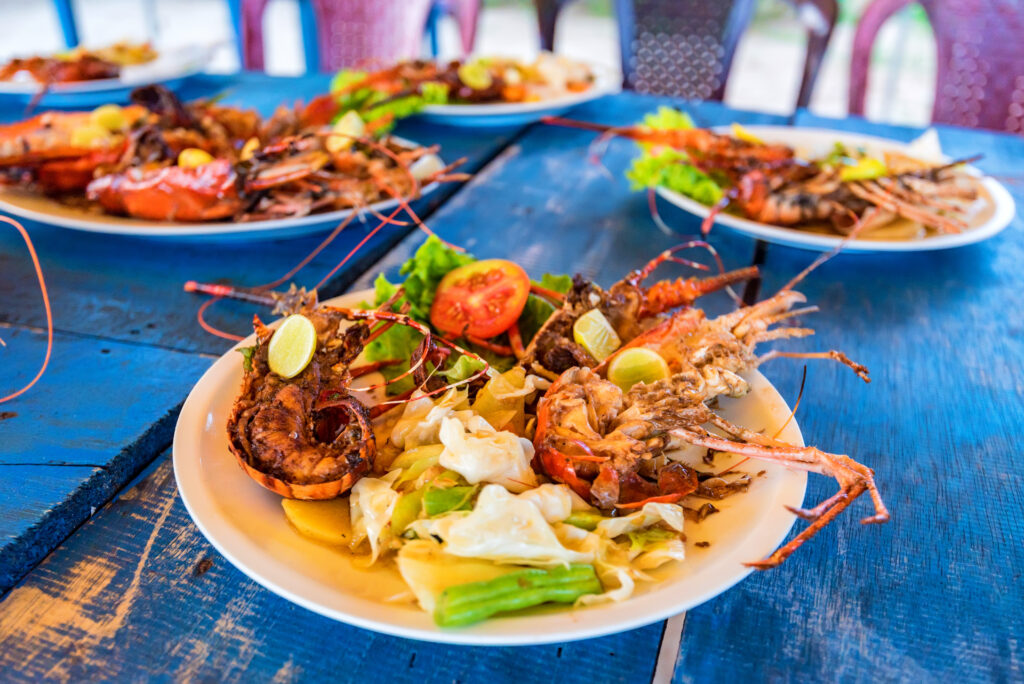
Lambi is the conch dish that runs through Saint Lucian seafood culture, and the version you get here is meaningfully better than the frozen-shipped version most US travelers have had. Grilled, curried, or stewed, the texture has to be right or the dish is leathery. The good kitchens know it.
Fresh fish runs the menu most days. The fishermen on the west coast (Anse La Raye, Soufriere, Marigot Bay) bring in mahi-mahi, kingfish, and snapper depending on the season. Order what was caught that morning. The hotel imports are the fall-back, not the move.
Restaurants Worth the Drive
The Coal Pot near Castries Harbour is the best argument for not eating only at the resort. The setting is small, the menu is short, and the kitchen has been doing this longer than most of the island’s resorts have existed. The Naked Fisherman Restaurant on Smugglers Cove is the easier, beach-leaning version of the same idea. Island Chef Cafe and the smaller Soufriere spots round out the better local-restaurant circuit.
The resort kitchens at Jade Mountain and Sugar Beach run their own polished versions of Caribbean food, and they earn the prices. The point is not to skip them. The point is to balance them with the smaller restaurants so the trip does not collapse into a buffet line.
The Things to Do in St. Lucia That Connect to the Food
The best things to do in St. Lucia route back through the food eventually. The cocoa estate tour at Hotel Chocolat works as both an agriculture day and a chocolate-tasting setup. The Friday night street party in Anse La Raye is the seafood-and-music event most travelers remember from the trip. The Castries Market on Saturday morning is the produce-and-spice anchor for travelers who want to understand the ingredient side of the island’s cooking.
Pair the food days with the calmer water activities. Lunch at the beach club, hike the Tet Paul Nature Trail in the morning, eat properly at dinner. The sequence is the point.
Food and Reflection on the Same Trip
Saint Lucia has become an unusually good destination for travelers who want a real reset alongside the food. The slow pace, the natural setting, and the way the meals stretch across hours all support the kind of trip where you actually think. A small notebook and a short list of journal prompts for self discovery in the bag turns the breakfast hour into an actual practice rather than a phone hour.
The travelers who get the most out of this combination treat the food as the anchor and the reflection as the bonus. It works in either order. The point is to give the day enough room for both.
Practical Notes for the Food Trip
A few practical notes. Bring a couple of light layers for the evenings, since the breeze on the west coast picks up after dark. Most restaurants run on the late side. A 7:30 reservation is the local norm. The local rum is excellent and inexpensive. The Piton beer is the casual answer to the late afternoon. Cash flows easily on the island but most quality restaurants take cards.
For travelers staying at a resort with a meal plan, the right move is to negotiate one or two off-property dinners into the week rather than trying to eat every dinner at the hotel. The trip lands harder with the local restaurant mix worked in.
Why an Advisor Earns Their Fee Here
The Saint Lucia food scene shifts quickly. Restaurants open and close, chefs move between resorts, and the underrated spots from two years ago are not always the underrated spots today. The team at Latitude 21 keeps the current reservation list and routes travelers through the operators who match the trip they actually want.
The single biggest impact a planner has on this kind of trip is sequencing the food days correctly. Done well, the food becomes the spine of the week rather than a side note.
Conclusion
Saint Lucia is one of the rare Caribbean trips that uses food as the connective tissue rather than the afterthought. Green fig and saltfish in the morning, soup at lunch, lambi on the grill at dinner, and a hammock between them is a perfectly defensible day. The travelers who arrive ready to let the meals run long are the ones who leave talking about Saint Lucia for years. Pick a trip that matches that pace and the island delivers what the marketing claims.
Travelers who use food as their primary lens for exploring Saint Lucia often find the same instinct served well by river cruises in Europe, where culinary programming, wine culture, and regional cuisine are built into the itinerary. River cruises in Europe on the Douro or through Burgundy are designed around exactly that kind of gastronomic travel. Avalon Waterways reviews frequently cite the onboard dining and shore-side wine excursions as highlights, and affordable European river cruises on these routes deliver food-forward experiences at accessible price points.