
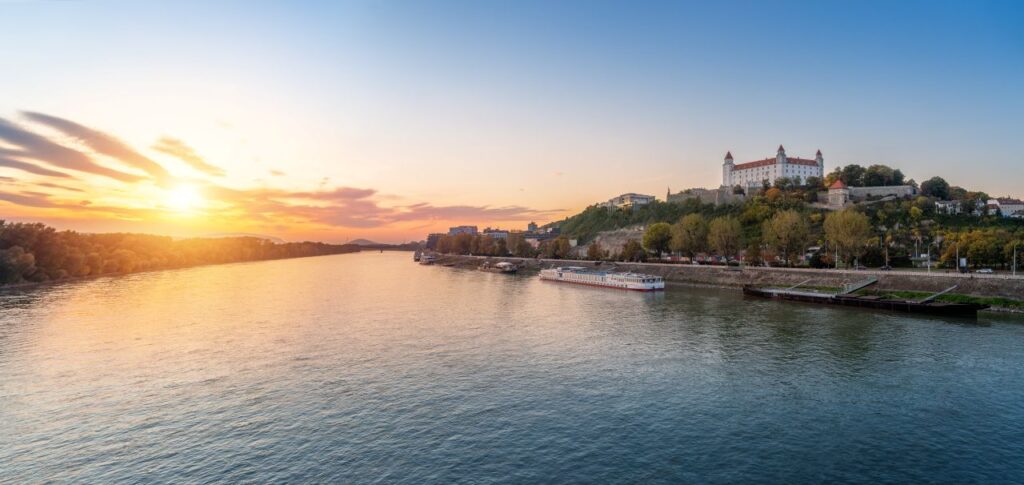
The Danube river cruise is the one I recommend when a client wants more historical weight than the Rhine provides. Travelers who have completed a Rhine river cruise through the Rhine gorge often come to the Danube looking for something with more city weight and less scenery-per-hour intensity, and the Danube delivers that shift. The Rhine is spectacular scenery and wine culture. The Danube is Budapest, Vienna, and the Wachau Valley in a single itinerary arc, which is a different kind of case for river cruises in europe. The river runs through or near three of the most consequential cities in Central European history, and the stops between them add Bratislava, the Wachau Valley UNESCO landscape, and the Benedictine abbey at Melk to an itinerary that most travelers describe as the most history-dense week of travel they have experienced.
The Wachau Valley and Why It Belongs on the Short List
The Wachau Valley sits between Melk and Krems in Austria and is a UNESCO World Heritage Site for the combination of its medieval architecture, its terraced Gruner Veltliner and Riesling vineyards, and the baroque monastery at Melk that anchors its western entrance. The most scenic river cruises in europe run through this stretch of the Danube in spring when the apricot orchards are in bloom and the vineyards are just leafing out. The view from the ship as it passes Durnstein, where Richard the Lionheart was once held captive, is the kind of layered visual that the river cruise format consistently delivers and that a road trip through the same country rarely produces at the same pace.
Vienna as a River Cruise Stop
Vienna is where a Danube river cruise justifies itself to clients who are skeptical about river cruising before they have tried it. The ship docks close enough to the Ringstrasse that the walk to the Kunsthistorisches Museum, the Vienna State Opera, and the Naschmarkt is measured in minutes rather than shuttle bus rides. Vienna has enough content for three days and most Danube itineraries give you one or two, which means the pre or post cruise hotel night in Vienna is one of the most consistent recommendations I make. The ship happy hour on the Vienna approach, with the Ringstrasse coming into view, is one of those moments that stays with travelers. Affordable european river cruises on the Danube tend to price the Vienna stop as part of the base itinerary, which makes it one of the best values in the category for travelers who want a genuine city experience built into their river week.
Bratislava as a Danube Stop
Bratislava is consistently underestimated by travelers who have not been there and consistently overdelivers for the ones who have. The old town is compact, walkable, and well-preserved. The castle sits above the city and produces a view of the Danube that tells you immediately why the bend here was strategically important for centuries. Most river cruises in europe give Bratislava a half-day, which is sufficient for the old town and the castle if you move with purpose. Travelers who want more should arrange the overnight stop that some lines offer, which allows for an evening in the city before the ship moves on toward Budapest.
Budapest as the Danube Finale
Budapest is the most scenic city stop on the most scenic river cruises in europe category when the Parliament building is lit at night and the river reflects it back. The Chain Bridge, the castle district, the thermal bath culture, the Central Market Hall. Budapest works at every level of travel interest and rewards the traveler who arrives with a day of context from the river behind them. Most Danube itineraries end or begin in Budapest, and the city is worth two or three days on either side of the sailing rather than a single stop afternoon.
The Lines That Run the Danube Well
The major river cruise lines all anchor their Central European programs on the Danube, and AMA, Avalon, and Viking run the strongest programs here, and the river cruising ships deployed here are purpose-built for the narrower Central European waterways, and the corridor is competitive enough that the differentiating factors are the cabin product and the excursion depth rather than the itinerary stops, which are largely fixed. Avalon waterways reviews of Danube sailings consistently highlight the Wachau and Budapest as the visual peaks of the trip and the Vienna stop as the cultural peak. Affordable european river cruises on the Danube are available in spring and fall when the prices drop from the summer peak and the corridor is running at less than full capacity. The most scenic river cruises in europe in the fall turn the Wachau vineyards to gold and copper in a way that spring simply cannot match. What Danube cruises offer that the Rhine corridor cannot is the combination of three capital cities in a single sailing. Vienna, Bratislava, and Budapest each justify a standalone trip. Threading them together on a single itinerary, with the Wachau Valley and Melk abbey between, produces a week of travel that is genuinely hard to replicate through independent booking at the same quality and pace.
Conclusion
Travelers moving over from ocean cruising often find the Danube itinerary the most natural first river sailing. The Danube delivers a version of Central Europe that independent travelers struggle to assemble at the same quality and pace. The Wachau Valley, Bratislava, Vienna, and Budapest in a single river cruises in europe week is an itinerary argument that sells itself once a client has looked at a map and thought about the logistics of seeing those four places any other way. Travelers who want a wine-forward alternative should look at the Douro valley river sailings in Portugal, but for history and city culture the Danube has no rival. Affordable european river cruises on the Danube in the shoulder season are one of the best travel values in the category, and the most scenic river cruises in europe give you the Wachau in full color and Budapest lit at night in the same week.
The UNESCO designation for the Wachau Cultural Landscape provides context for why this stretch of the Danube carries the weight it does in European river cruise itineraries.
After the Wachau, the natural next stop is the city that anchors the lower Danube itinerary — read our guide to Discovering Vienna with Avalon and AMA.