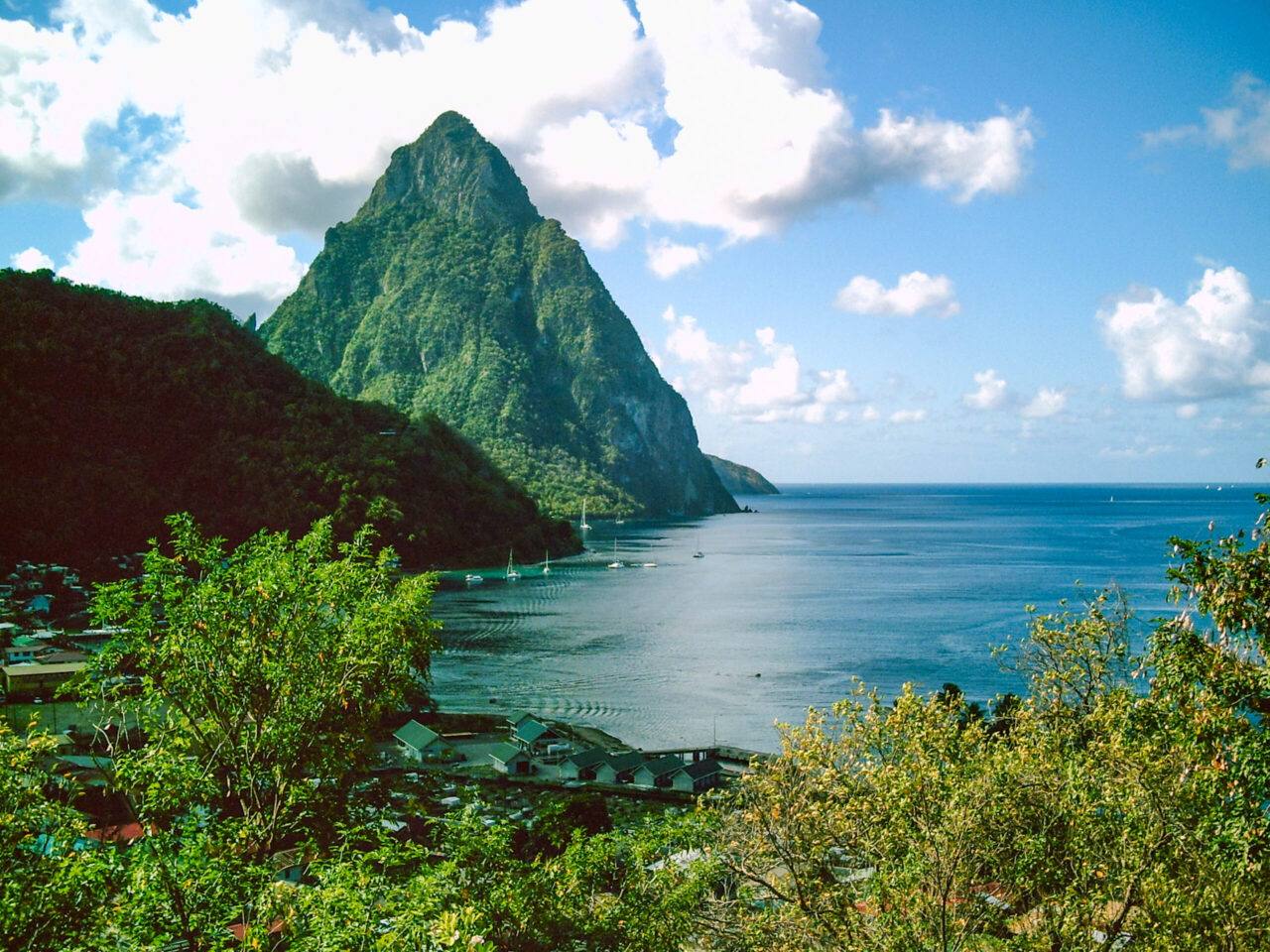
The Pitons: St. Lucia’s Defining Landmarks
The Pitons St Lucia rise sharply from the sea and set the tone for adventure on the island. These twin peaks are a UNESCO World Heritage Site and form a dramatic backdrop along the southwest coast. Each peak is a volcanic plug, shaped by ancient eruptions and time. Gros Piton Mountain stands taller and welcomes hikers, while Petit Piton draws climbers with steeper faces.
Visitors feel the scale immediately. Cruise ships often pause offshore so guests can admire the silhouette. On land, Sugar Beach sits between the peaks, offering one of the island’s most photogenic stretches of sand and calm water.
Hiking Gros Piton St Lucia: What to Expect
Hiking Gros Piton St Lucia is the island’s signature outdoor experience. Travelers often ask about Gros Piton hike difficulty before committing. The climb is challenging but achievable for active travelers who prepare well. Expect uneven terrain, steep sections, and humid conditions.
A licensed Gros Piton hike guide is required, and for good reason. A tour guide sets the pace, shares local history, and keeps hikers safe. Many hikers recommend sturdy hiking boots, plenty of water, and a steady rhythm. The entrance fee supports local conservation and guides from nearby communities.
Hike Gros Piton for the Views from the Top
Those who hike Gros Piton earn sweeping views from the top. The trail winds through forest and open ridges, revealing the Caribbean Sea and surrounding villages. On clear days, hikers see Sugar Beach far below and the coastline stretching toward Vieux Fort.
These views from the top reward every step. Many travelers say the climb is tough but highly recommend it for the sense of accomplishment alone. For visitors who prefer something gentler, other hiking trails still deliver impressive scenery.
Tet Paul Nature Trail and Easier Walks
Tet Paul Nature Trail offers a shorter and more relaxed option. The Tet Paul nature walk sits near Soufrière and provides panoramic views without a long climb. Paul Nature Trail paths stay well maintained and accessible, making it ideal for families and casual walkers.
Guides explain local plants, farming traditions, and the island’s history, including stories tied to Fond Gens Libre. From lookout points, visitors see both Pitons framed by farmland and sea. This trail proves that adventure in St. Lucia comes in many forms.
Waterfalls and Volcanic Landscapes
Toraille Waterfall St Lucia adds a refreshing stop after a hike. The waterfall drops into a cool pool where visitors can swim beneath cascading water. Nearby, Toraille Waterfall Villas & ATV experiences combine nature with light adventure for travelers who want variety.
Close by, Sulphur Springs St. Lucia showcases the island’s volcanic energy. The Soufrière Drive In Volcano lets visitors see bubbling mud and steaming vents up close. Hot springs nearby invite a soothing soak, a perfect contrast to hiking days. Travelers sometimes compare this site to Volcan Soufrière Guadeloupe, but St. Lucia’s drive in access makes it unique.
Soufrière and the Southwest Coast
Soufrière anchors many of these natural highlights. The town feels laid back and scenic, with easy access to waterfalls, trails, and sulphur springs. The area’s beaches and reefs also support the island’s reputation for the best Caribbean diving resorts.
Divers explore reefs near the Pitons, where volcanic rock creates dramatic underwater formations. Calm conditions and clear water attract both beginners and experienced divers.
Castries and Local Life
Castries Market in St Lucia offers a lively contrast to quiet trails. Vendors sell fruit, spices, crafts, and local snacks. The market gives travelers a sense of daily life and culture beyond resorts.
Castries also serves as a port for cruise ships, making it a first stop for many visitors. From here, travelers head south to explore Gros Piton Mountain and the island’s natural core.
Luxury with a View
St. Lucia pairs adventure with refined stays. Jade Mountain Resort St Lucia Caribbean sits high above the coast, facing the Pitons. St Lucia Jade Mountain all inclusive experiences focus on privacy, views, and wellness. Many travelers research St Lucia Jade Mountain prices to understand how the setting and service compare to other luxury options.
Hotel Thermal All Inclusive stays appeal to travelers who want spa style relaxation near volcanic features. These properties complement active days with comfort and care.
Climbing and Specialized Adventures
For experienced climbers, rock climbing Piton and Pitons climbing routes provide technical challenges. These climbs require skill, permits, and professional guides. They add another layer of adventure for travelers seeking something beyond hiking trails.
Even without climbing, the Pitons shape nearly every view and experience in the region. Their presence ties together hiking, diving, beaches, and culture.
Planning the Experience Well
St. Lucia rewards thoughtful planning. Weather, fitness level, and interests all matter. Choosing the right hike, scheduling rest days, and working with knowledgeable guides make a big difference.
Advisors who know the island help travelers balance adventure with relaxation. They recommend when to hike Gros Piton, how to pair Tet Paul Nature Trail with waterfalls, and where to stay for the best views. With expert guidance, visitors experience St. Lucia’s most iconic sights in a way that feels confident, safe, and deeply memorable.